
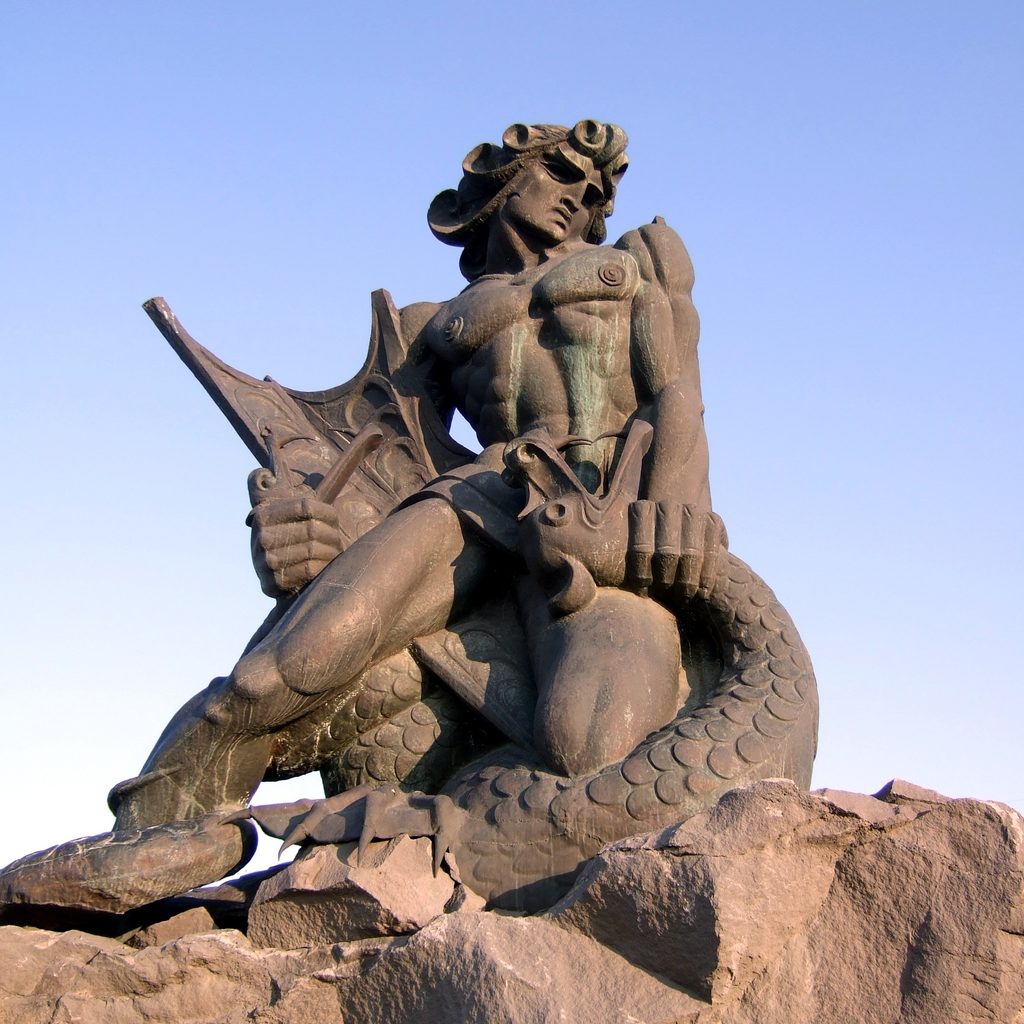
Synopsis: The fall of Old Europe and dissolution of the Cucuteni-Tripolye Culture left horse-riding steppe-herders the unchallenged paradigm on the Pontic-Caspian steppe. The introduction of the wagon around 3500 BC enabled their adoption of a fully-nomadic lifestyle, culminating with the complete dominance of the Proto-Indo-European-speaking Yamnaya horizon.
“I will declare the manly deeds of Indra, the first that he achieved, the Thunder-wielder. He slew the Dragon, then disclosed the waters, and cleft the channels of the mountain torrents. He slew the Dragon lying on the mountain: his heavenly bolt of thunder Tvastar fashioned. Like lowing kine in rapid flow descending the waters glided downward to the ocean.” – The Rig-Veda Book 1, Hymn XXXII. Indra
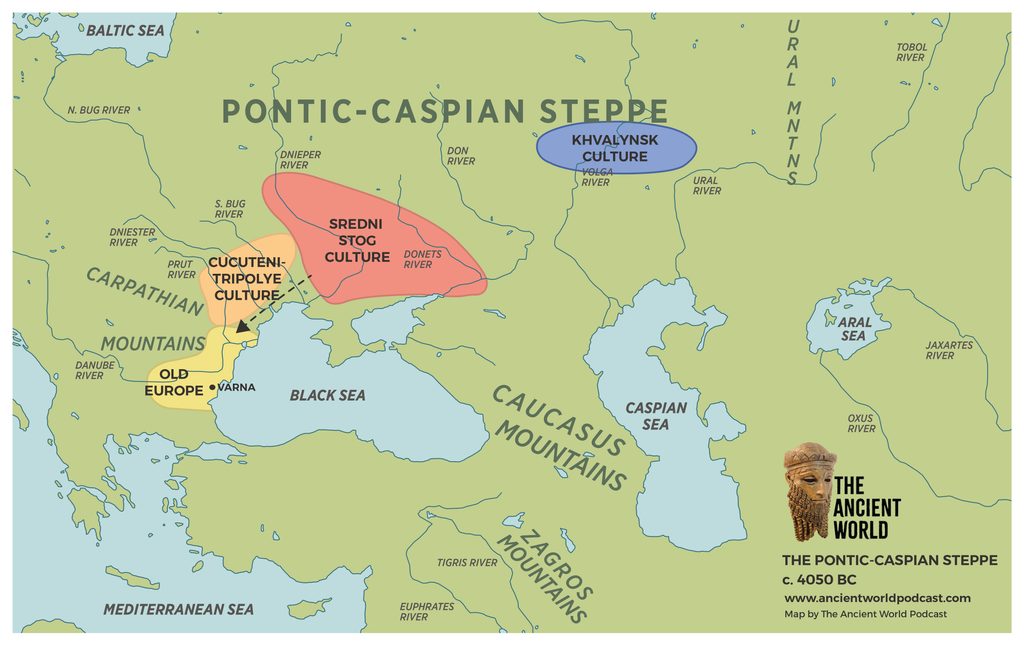
Map of the Pontic-Caspian Steppe c. 4050 BC:
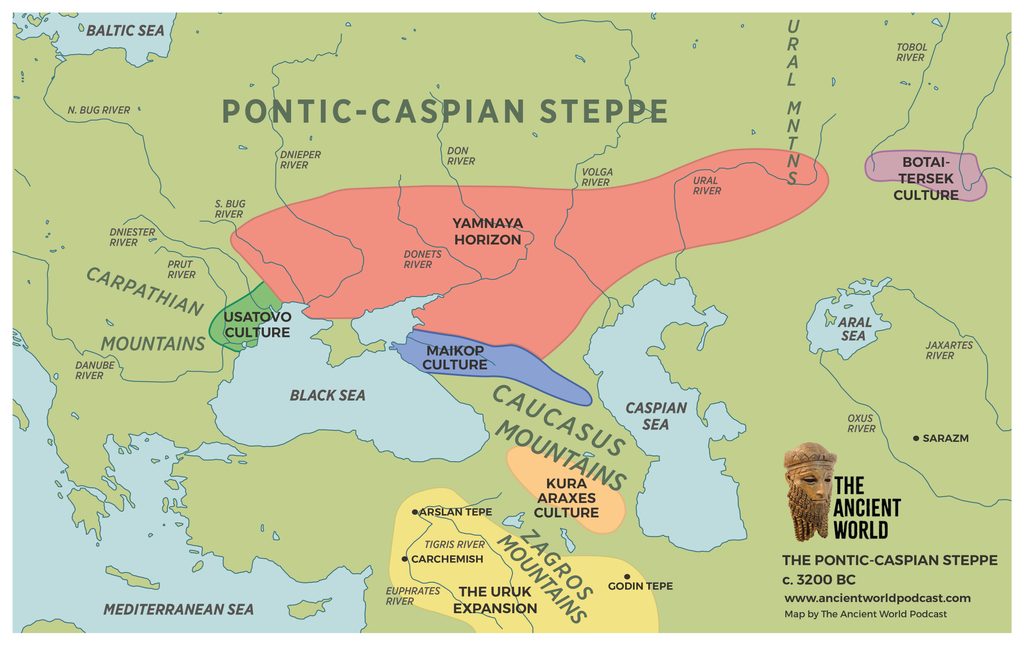
Map of the Pontic-Caspian Steppe c. 3200 BC:
Episode A14 Images (click here)
References and Further Reading:
https://audio.ancientworldpodcast.com/A14_References.pdf
Please contact advertising@airwavemedia.com if you would like to advertise on this podcast.

Be the first to reply